

What Happens in Our Bodies and How We Can Heal
“Trauma is not what happens to you, but what happens inside you as a result of what happened to you.” — Dr. Gabor Maté
What is Trauma?
Trauma isn’t just about “bad things happening” to us. It’s about how our nervous system responds when we face overwhelming experiences that we cannot process or integrate at the moment they occur.
When we experience something overwhelming and cannot fight or flee, our body stores that unprocessed experience. This stored energy becomes trapped in our nervous system, creating patterns that can affect us long after the event has passed.
Trauma can reshape how we see ourselves, others, and the world around us. It can change how our bodies respond to stress, how we form relationships, and even how we experience joy.
Big T vs. Small t Trauma
Big T Trauma
These are the events most people immediately recognize as traumatic:
- Natural disasters
- Physical or sexual assault
- War experiences
- Serious accidents
- Sudden loss of loved ones
Big T events are often life-threatening or involve serious harm. They can create immediate, noticeable symptoms that might lead to a PTSD diagnosis.
Small t Trauma
Small t traumas are often overlooked but can be just as impactful:
- Emotional neglect or invalidation
- Persistent criticism or bullying
- Ongoing financial insecurity
- Relationship betrayals
- Medical procedures or health scares
- Discrimination or microaggressions
These experiences might not seem “dramatic” enough to count as trauma, but when repeated or occurring during vulnerable periods of development, they can profoundly shape our nervous system and worldview.
Important note: What determines whether something is traumatic isn’t the event itself but how our nervous system responds to it. What traumatizes one person might not affect another in the same way.
How Trauma is stored in the Body
Trauma doesn’t just live in our memories—it resides in our physical bodies. When unresolved, it can show up as:
- Chronic tension or pain
- Digestive issues
- Sleep disturbances
- Heightened startle response
- Difficulty feeling present or grounded
- Emotional numbness or overwhelming emotions
Dr. Bessel van der Kolk describes this phenomenon in his book title: “The Body Keeps the Score.” Our bodies literally hold onto traumatic experiences until we find ways to process and release them.
the Polyvagal Theory
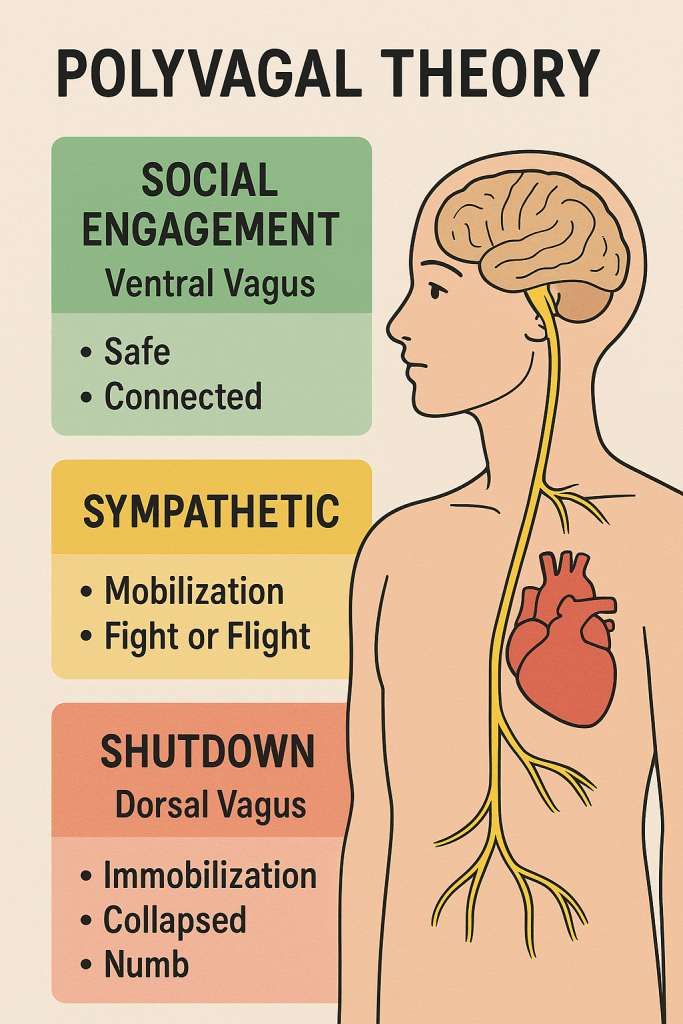
Polyvagal Theory, developed by Dr. Stephen Porges, helps explain how our nervous system responds to safety and danger. It identifies three main states:
- Ventral Vagal State (Social Engagement) – When we feel safe and connected. Our breathing is easy, our heart rate is regulated, we can think clearly, and we feel present.
- Sympathetic State (Fight or Flight) – When we detect danger. Our heart races, breathing quickens, muscles tense, and we prepare to defend ourselves or escape.
- Dorsal Vagal State (Freeze) – When we can’t fight or flee. Our system shuts down, we feel numb, disconnected, collapsed, or dissociated.
Trauma can cause our nervous system to get “stuck” in survival states (sympathetic or dorsal vagal), making it difficult to access feelings of safety even when no danger is present.
Why Understanding Trauma Matters
Understanding trauma as a bodily experience rather than just an emotional or mental one explains:
- Why talk therapy alone isn’t always enough
- Why we can be triggered by seemingly unrelated stimuli
- Why logical reassurance doesn’t always help us feel safe
- Why self-regulation skills are essential for healing
The Good News: Your Body Can Heal
Our bodies have an innate capacity for healing, just as they do for physical wounds. With the right support and tools, we can:
- Learn to recognize our nervous system states
- Develop skills to regulate our activation levels
- Process trapped energy and emotions
- Rebuild a sense of safety in our bodies
- Reconnect with ourselves and others
Note: This post is educational and not a replacement for professional mental health support. If you’re struggling with trauma symptoms, please reach out and book a session.
 Raquel Nicolau Counselling
Leave a comment